Introduction
Art is more than a hobby it is a discipline that combines practice and theory. Every child deserves a complete art education that engages the hands, heart, and head.
Hands‑On Art Builds Skills
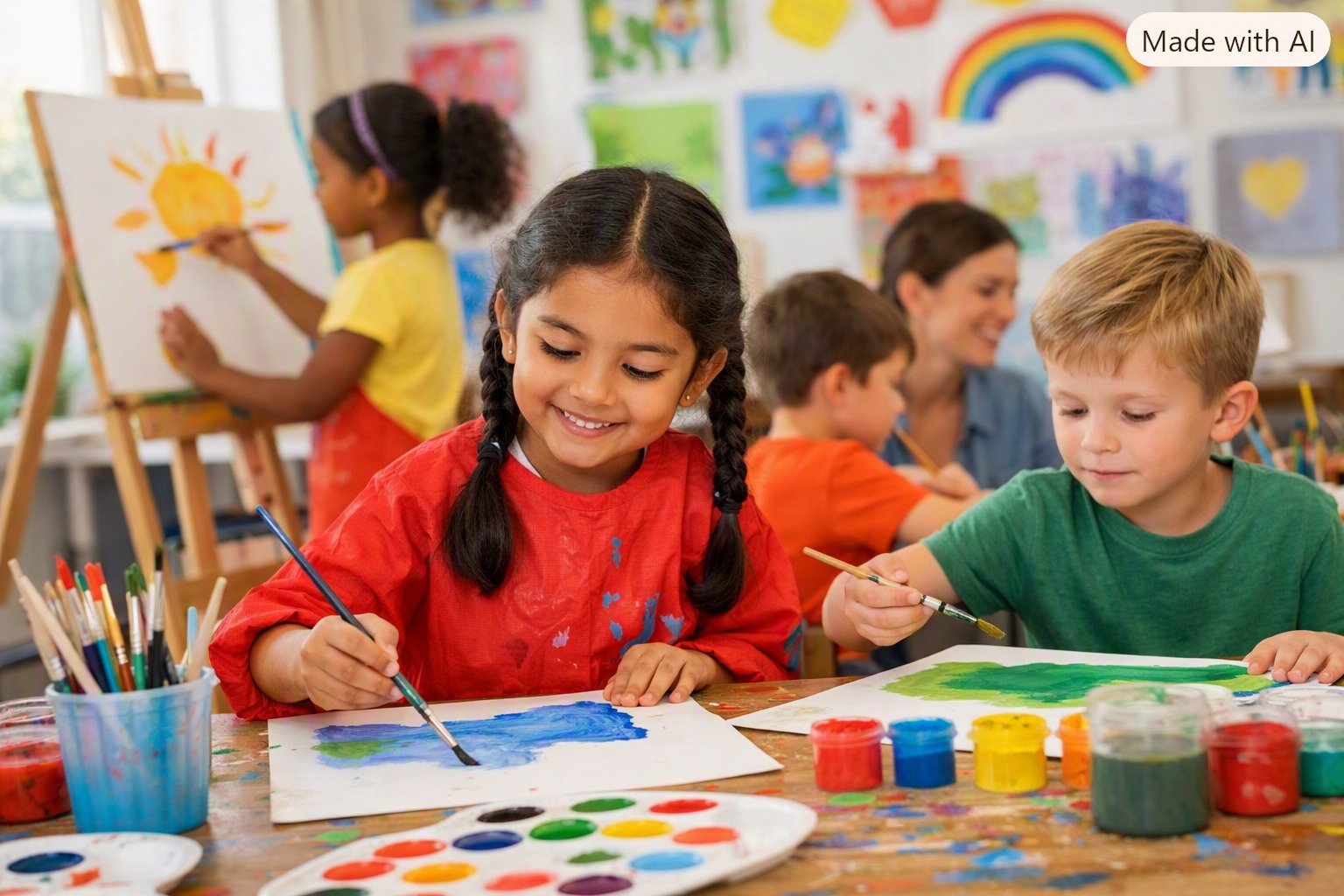
Practical art activities develop motor skills, confidence, and creativity. From painting to sculpture, hands‑on experiences allow children to explore, experiment, and express themselves freely.
Theories of Art Strengthen Understanding
Studying art history and theory connects students to culture, heritage, and critical thinking. It helps them understand the “why” behind artistic movements and techniques, enriching their practice.
Balanced Growth Through Practice and Theory
Hands‑on practice and academic study together ensure holistic development. Students learn not only to create but also to analyze, critique, and appreciate art in context.
Why Every Child Must Learn Art
Art education prepares children for a life enriched by creativity and understanding. It fosters innovation, empathy, and intellectual curiosity qualities essential for future success.
Conclusion
A complete art education combines practice and theory, ensuring children grow as creators and thinkers. Every child deserves this balance to thrive in school and beyond.
Call to Action
Explore more about integrating art and technology in classrooms by registering for iCraft Education’s free webinar AI for Art Teachers on 2nd October 2026.